When we are children, friendship seems effortless.
You meet someone at school, share a snack, play together, and suddenly you have a best friend.
As adults, things become much more complicated.
Many people reach their thirties or forties and quietly wonder:
“What happened to all my friends?”
The truth is that friendship changes with age, and for many people, it becomes one of the most painful yet least discussed parts of growing older.
The Friendship Crisis of Adulthood
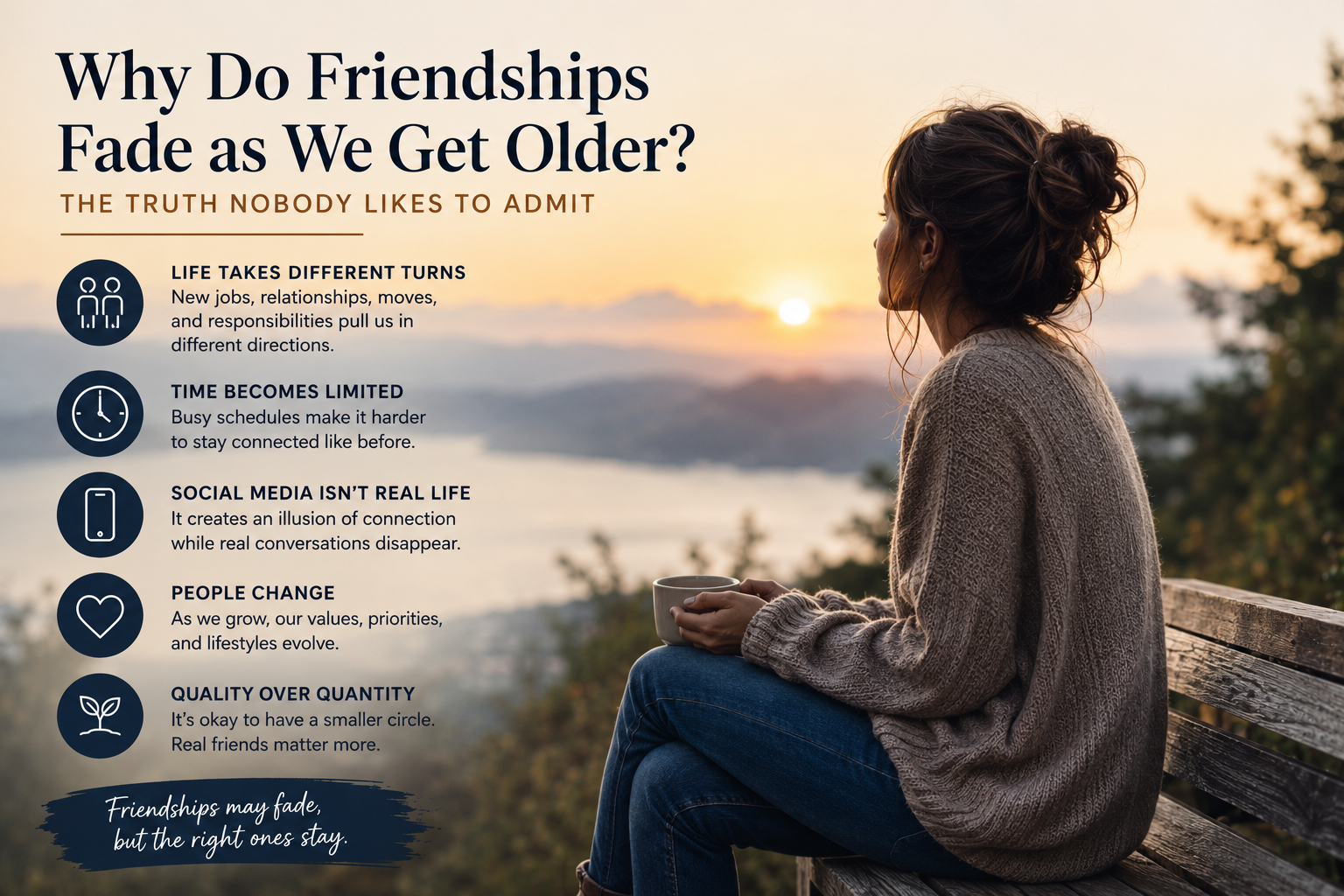
At some point, life begins pulling people in different directions.
One friend gets married.
Another moves abroad.
Someone else becomes consumed by work.
Others have children.
Before you know it, the group chat becomes silent.
Messages go unanswered.
Birthdays are forgotten.
And friendships that once felt permanent slowly fade away.
Not because anyone did something wrong.
Simply because life happened.
Why Losing Friends Hurts So Much
Research shows that strong friendships are one of the biggest predictors of happiness and emotional wellbeing.
Friends are often the people who understand our history.
They remember who we were before the responsibilities.
Before the mortgages.
Before the stress.
When friendships disappear, it can feel as though a part of our identity disappears with them.
The Uncomfortable Truth
Many adult friendships are built on convenience.
School.
University.
Work.
Shared locations.
When those environments change, the friendship often loses the structure that kept it alive.
This realization can be painful.
But it also explains why maintaining friendships requires much more effort as we age.
Social Media Makes It Worse
Today we are constantly connected, yet many people feel lonelier than ever.
We see photographs of people laughing together.
We see holiday pictures and celebrations.
Yet what we often don’t see is how many people behind those photographs feel isolated.
Social media creates the illusion that everyone else has thriving friendships.
In reality, many adults are struggling with exactly the same loneliness.
Signs a Friendship Has Naturally Run Its Course
Sometimes friendships end not because of conflict, but because people grow in different directions.
Signs include:
- Conversations feel forced.
- You no longer share similar values.
- One person is always making the effort.
- Time together feels draining rather than energizing.
- You have become completely different people.
Not every friendship is meant to last forever.
And that is okay.
How to Build New Friendships as an Adult
The good news is that meaningful friendships can still be created at any age.
Start small.
Join a local group.
Take a class.
Volunteer.
Reconnect with someone you have lost touch with.
Most importantly, be willing to make the first move.
Many adults are waiting for someone else to reach out.
A Final Thought
If your friendship circle is smaller than it used to be, you are not alone.
Growing older often teaches us that friendship is less about quantity and more about quality.
One genuine friend who supports you through difficult times is worth more than a hundred casual acquaintances.
Friendships may change.
Some may end.
Others may surprise you and become stronger than ever.
The people who truly matter often stay, even when life becomes busy.
And sometimes, the friendships we find later in life become the ones we cherish most.