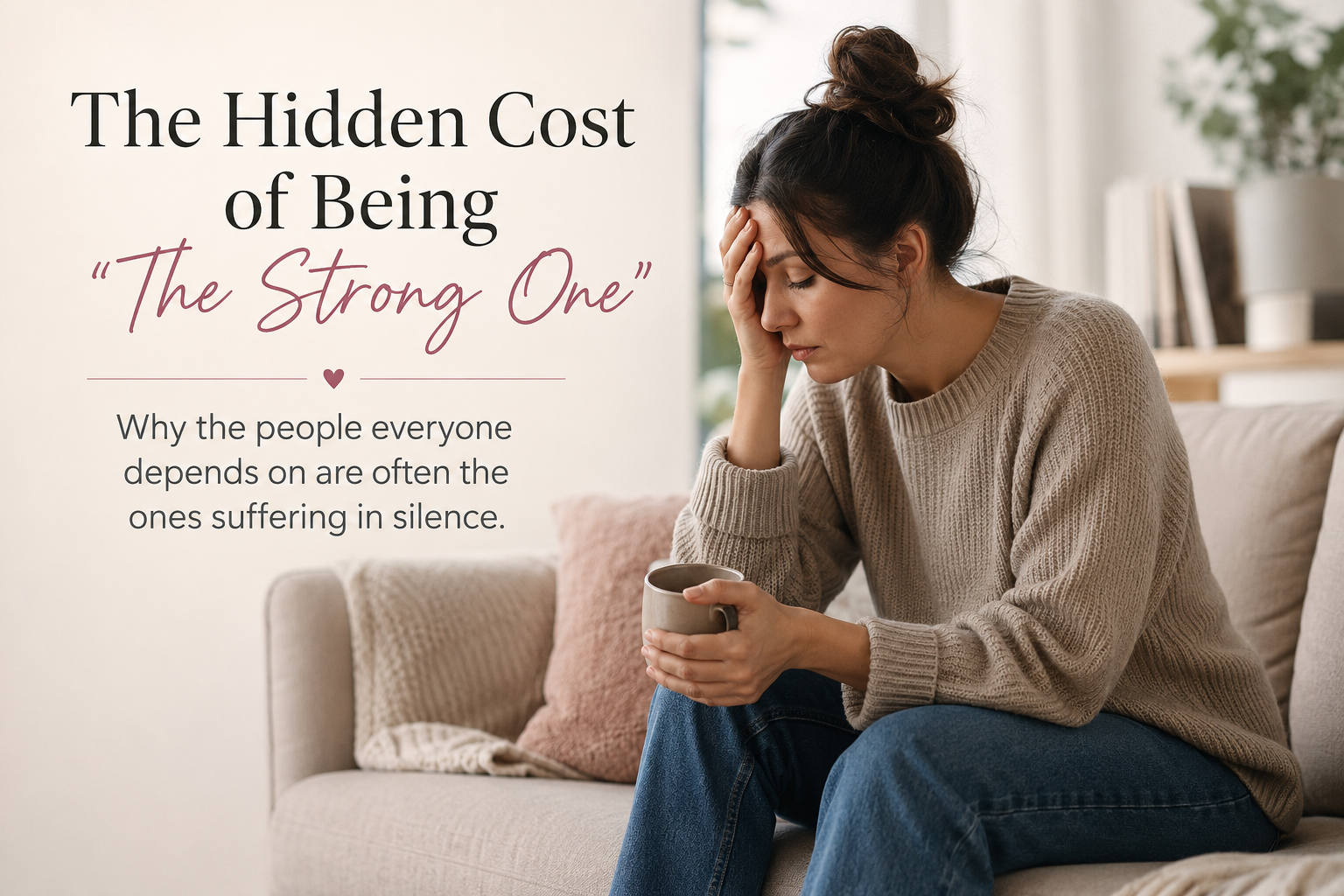
Why the people everyone depends on are often the ones suffering in silence.
There is a woman I know who has never described herself as stressed.
She wakes up early, gets the children ready, remembers birthdays, checks on elderly relatives, helps friends through breakups, volunteers at school events, keeps track of appointments, and somehow still manages to show up to work looking composed.
People admire her.
They call her reliable.
Dependable.
Strong.
When something goes wrong, everyone calls her.
When someone needs help, they know she’ll say yes.
When there is a crisis, she is the first person people think of.
For years, she wore this reputation like a badge of honour.
Then one Tuesday afternoon, while sitting in her car outside a supermarket, she burst into tears.
Nothing terrible had happened.
Nobody had died.
There wasn’t a major emergency.
In fact, she couldn’t explain why she was crying at all.
The tears simply arrived.
Months later, after speaking with a therapist, she realised something important.
She wasn’t weak.
She wasn’t failing.
She was exhausted.
Not physically exhausted.
Emotionally exhausted.
And she had been carrying that weight for years without realising it.
The Role Nobody Applies For
Most of us don’t wake up one morning and decide to become “the strong one.”
The role develops gradually.
You are responsible.
You help people.
You solve problems.
You remember things others forget.
You step in when others step back.
Over time, family members begin relying on you.
Friends rely on you.
Colleagues rely on you.
Before long, you become the unofficial organiser, mediator, caregiver, planner, and emotional support system for everyone around you.
The problem is that while people notice your strength, they rarely notice the cost.
Being the strong one often means there is no space for your own struggles.
After all, who looks after the person everyone else depends on?
The Invisible Work Nobody Sees
Psychologists have a term for some of this burden: emotional labour.
Originally used to describe managing emotions in the workplace, the concept has expanded to include the invisible emotional work many people perform every day.
Remembering appointments.
Checking on relatives.
Monitoring other people’s moods.
Keeping peace within the family.
Anticipating problems before they happen.
Making sure everyone feels okay.
Most of this work goes unnoticed because it happens silently.
Nobody thanks you for remembering that your father has a medical appointment next week.
Nobody congratulates you for noticing your friend seems withdrawn and reaching out before she asks for help.
Nobody applauds the countless decisions you make each day to keep life running smoothly.
Yet each responsibility consumes energy.
And over months or years, those small demands accumulate.
Imagine carrying a backpack.
The first book placed inside feels light.
Then another.
And another.
Eventually the weight becomes significant.
But because the weight was added gradually, you barely notice how heavy it has become.
Many strong people live exactly this way.
Not collapsing under one dramatic burden, but slowly becoming overwhelmed by hundreds of small ones.
Why Strong People Often Miss the Warning Signs
One of the greatest ironies of emotional exhaustion is that the people most affected are often the least likely to recognise it.
Why?
Because strength becomes part of their identity.
They are the helper.
The fixer.
The reliable one.
Admitting they need support feels uncomfortable because it clashes with the image they have built for themselves.
Some even feel guilty for struggling.
They tell themselves:
“Other people have it worse.”
“I should be grateful.”
“I can handle this.”
“I just need to push through.”
Unfortunately, emotional exhaustion doesn’t disappear because we ignore it.
In many cases, it quietly grows stronger.
The body often notices before the mind does.
You may find yourself:
- Waking up tired despite sleeping enough.
- Feeling irritated by small inconveniences.
- Becoming forgetful.
- Losing interest in activities you once enjoyed.
- Feeling emotionally numb.
- Struggling to concentrate.
- Becoming unusually sensitive to criticism.
These are not signs of weakness.
They are warning lights.
Just as a car dashboard warns us when something needs attention, our minds and bodies send signals when we are carrying too much.
What Science Says About Chronic Stress
Researchers have spent decades studying what happens when people experience long-term stress.
When we encounter a challenge, our bodies release hormones such as cortisol and adrenaline.
In small doses, these hormones help us respond effectively.
The problem arises when stress becomes constant.
Instead of returning to a balanced state, the body remains on high alert.
Over time, chronic stress has been associated with:
- Increased fatigue.
- Sleep disturbances.
- Anxiety.
- Depression.
- Reduced immune function.
- Cardiovascular problems.
- Difficulty concentrating.
What makes emotional responsibility particularly challenging is that there is rarely a clear finish line.
A work project eventually ends.
A race eventually ends.
But caring for children, supporting relatives, managing relationships, and solving everyday problems can continue indefinitely.
Without periods of recovery, even the strongest individuals can become depleted.
The Myth That Strength Means Self-Sacrifice
Many of us grow up believing that good people always put others first.
While generosity is admirable, there is a difference between helping others and abandoning yourself.
Imagine your mobile phone battery permanently stuck at 10%.
You would not expect it to function at full capacity.
Yet many people expect exactly that from themselves.
They continue giving.
Supporting.
Helping.
Organising.
Listening.
All while running on emotional fumes.
Real strength is not the ability to carry everything forever.
Real strength includes recognising when the load has become too heavy.
It includes asking for help.
Setting boundaries.
Resting without guilt.
And accepting that your wellbeing matters too.
How to Put Down the Backpack
The solution is not becoming selfish.
It is becoming sustainable.
Start by asking yourself three questions:
- Which responsibilities genuinely belong to me?
- Which responsibilities have I taken on unnecessarily?
- What would happen if I stopped carrying everything alone?
Many people discover that the world does not fall apart when they begin setting healthy boundaries.
Others step up.
Problems solve themselves.
Expectations adjust.
Most importantly, they regain energy they didn’t realise they had lost.
Small changes often have the greatest impact:
- Saying no without lengthy explanations.
- Taking regular walks alone.
- Protecting sleep.
- Turning off notifications.
- Delegating tasks.
- Scheduling time for yourself before your calendar fills with obligations.
These actions may appear simple.
But they are often transformative.
Final Thoughts
Perhaps the greatest tragedy of being “the strong one” is that the role can become a prison.
People admire your resilience.
They praise your reliability.
They depend on your strength.
Yet beneath the surface, you may be carrying burdens nobody else can see.
If this article feels uncomfortably familiar, consider this your reminder:
You are allowed to rest.
You are allowed to ask for help.
You are allowed to put down the backpack.
Because strength is not measured by how much suffering you can endure.
It is measured by how wisely you care for yourself while caring for others.