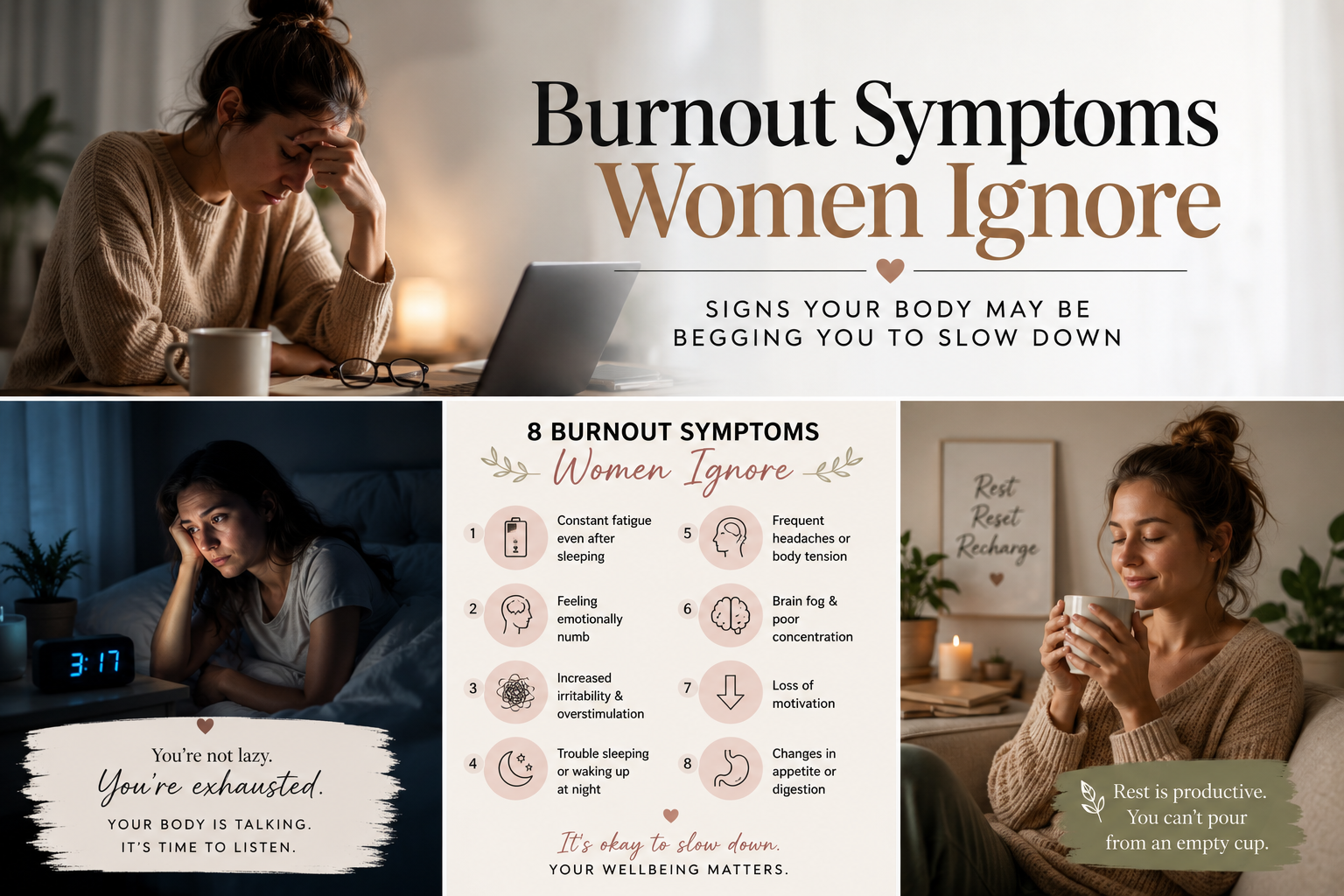

Modern women are balancing more than ever before — careers, family responsibilities, relationships, finances, social pressure, and the constant feeling of needing to “keep going.”
The problem is that burnout does not always look dramatic. In many cases, it builds quietly over time until the body and mind simply cannot keep up anymore.
Many women ignore the early warning signs because they appear “normal” in a busy lifestyle. But chronic stress and emotional exhaustion can seriously affect physical health, hormones, sleep, mood, and overall wellbeing.
If you constantly feel exhausted, emotionally drained, or disconnected from yourself, your body may already be showing signs of burnout.
What Is Burnout?
Burnout is a state of emotional, mental, and physical exhaustion caused by prolonged stress. It often develops gradually, making it difficult to recognize in the early stages.
While burnout is commonly associated with work stress, it can also come from:
- Parenting responsibilities
- Emotional overload
- Relationship stress
- Financial pressure
- Lack of rest
- Caring for others while neglecting yourself
Women are especially vulnerable because many carry invisible emotional responsibilities every day while continuing to function normally on the outside.

Burnout Symptoms Women Commonly Ignore
1. Constant Fatigue Even After Sleeping
One of the biggest signs of burnout is waking up tired despite getting enough sleep.
You may feel:
- mentally exhausted
- physically drained
- heavy or unmotivated in the morning
- dependent on caffeine just to function
Chronic stress affects the nervous system and can disrupt the body’s natural energy regulation.
2. Feeling Emotionally Numb
Burnout does not always cause emotional breakdowns. Sometimes it causes the opposite.
Women experiencing burnout may:
- stop feeling excited about things they once loved
- feel disconnected emotionally
- avoid conversations
- feel mentally “checked out”
This emotional shutdown is often the body’s way of protecting itself from overwhelm.
3. Increased Irritability and Overstimulation
Small things suddenly feel unbearable:
- loud noises
- messages and notifications
- people asking questions
- everyday responsibilities
When the nervous system is overloaded for too long, even normal daily situations can feel overwhelming.
4. Trouble Sleeping or Waking Up at Night
Many women experiencing burnout struggle with:
- difficulty falling asleep
- waking up around 3am
- racing thoughts at night
- restless sleep
Stress hormones like cortisol can disrupt healthy sleep patterns, making recovery even harder.
5. Frequent Headaches or Body Tension
Burnout often appears physically before emotionally.
Common physical symptoms include:
- headaches
- jaw tension
- neck pain
- shoulder tightness
- digestive discomfort
- chest tightness
The body stores stress physically when it is not processed properly.
6. Brain Fog and Poor Concentration
Do you forget simple things lately?
Burnout can affect cognitive function and concentration, leading to:
- forgetfulness
- poor memory
- difficulty focusing
- feeling mentally slow
- struggling to make decisions
Many women blame themselves for being “lazy” when in reality their brain is simply overwhelmed.
7. Loss of Motivation
Burnout can make even small tasks feel exhausting.
You may notice:
- lack of interest in hobbies
- difficulty starting tasks
- procrastination
- emotional exhaustion from simple responsibilities
This is not necessarily laziness — it may be emotional depletion.
8. Changes in Appetite or Digestion
Stress and burnout can affect gut health significantly.
Some women experience:
- bloating
- constipation
- emotional eating
- sugar cravings
- loss of appetite
- stomach discomfort
The gut and nervous system are deeply connected, which is why stress often impacts digestion.
Why Women Often Ignore Burnout
Many women are conditioned to continue functioning no matter how exhausted they feel.
Society often praises women for:
- multitasking
- overworking
- constantly helping others
- sacrificing rest
- “doing it all”
Unfortunately, this can normalize chronic stress and emotional exhaustion.
Ignoring burnout for too long can eventually affect:
- hormone balance
- immune function
- mental health
- sleep quality
- relationships
- overall wellbeing
How to Start Recovering From Burnout
Recovery does not happen overnight, but small daily changes can help regulate the nervous system and support emotional wellbeing.
Prioritize Rest Without Guilt
Rest is not laziness. Your body needs recovery to function properly.
Reduce Constant Stimulation
Limit excessive scrolling, notifications, and mental overload when possible.
Support Your Nervous System
Simple habits like:
- walking
- deep breathing
- spending time outside
- reducing caffeine
- improving sleep habits
can help calm chronic stress responses.
Stop Ignoring Your Body’s Signals
Your body usually whispers before it screams.
Fatigue, irritability, emotional numbness, and brain fog are not things to simply “push through” forever.
Final Thoughts
Burnout is becoming increasingly common among women living in a constantly connected and overstimulated world.
The earlier you recognize the signs, the easier it becomes to protect your physical and emotional health before complete exhaustion takes over.
Listening to your body is not weakness — it is self-awareness.
If you have been feeling emotionally drained, constantly tired, or mentally overwhelmed, this may be your sign to slow down and prioritize your wellbeing again.